
This blog isn’t real.
We wrote an absurdly over-written recipe post on purpose, to show off something that is real: Savor’s browser finding an actual recipe buried in all… this. Enjoy Marguerite’s descent into lasagne-based grief, or tap the little Savor icon any time you’ve had enough.
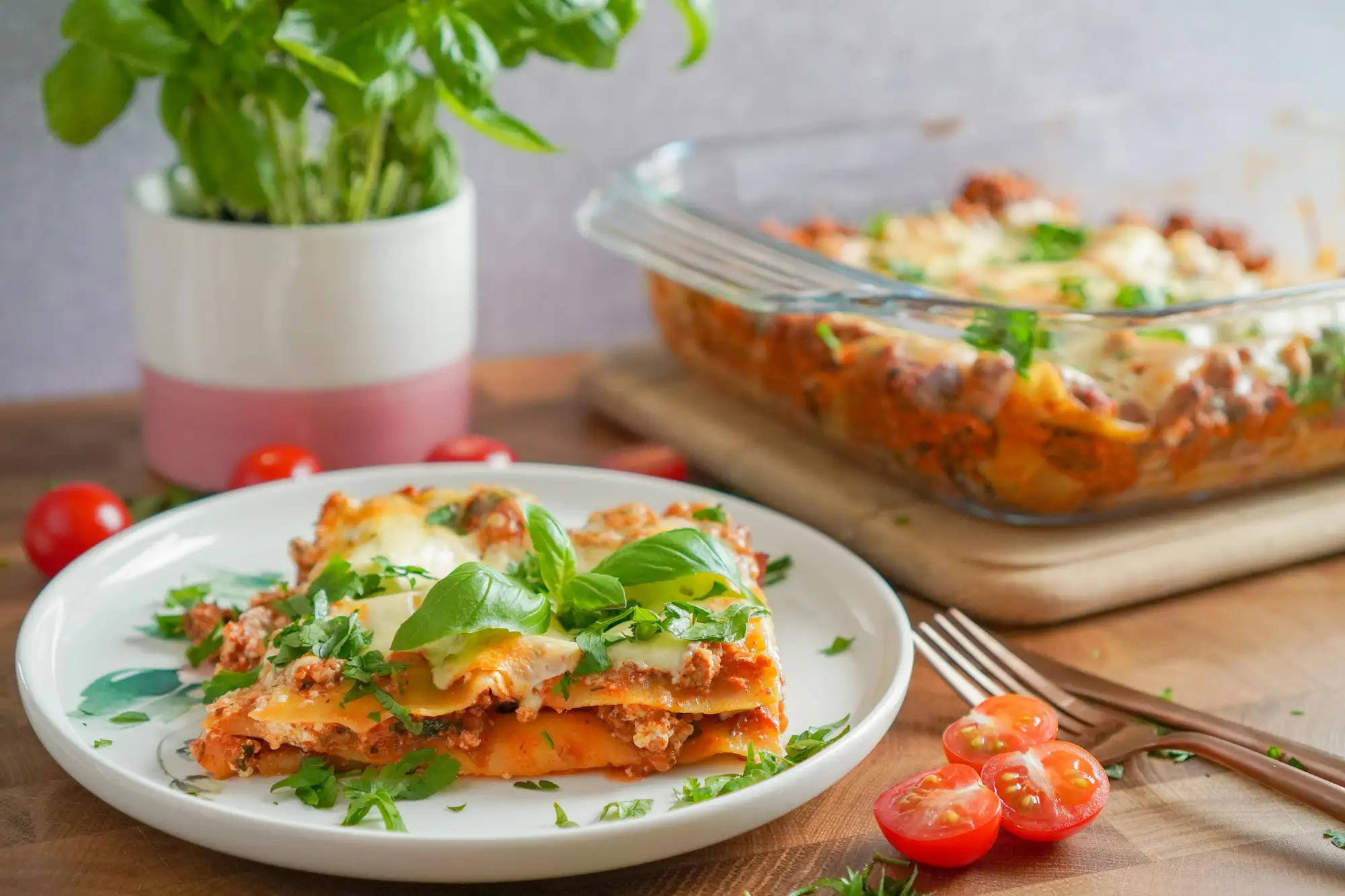
The Only Lasagne Recipe You'll Ever Need (An Odyssey)
Before we get to the lasagne, you deserve to know why this dish saved my marriage. And then ended it.
The Story
It began, as most things in my kitchen do, with grief disguised as hunger. Robert and I had been married for six years when I first layered this particular ragù, and I want to be honest with you here, in this space, because that is the kind of writer I am: honesty first, recipe fourteenth.
We had just moved into a house with a gas stove that hissed like it disapproved of us. I made the lasagne on a Tuesday. Robert cried at the table. Not from the onions — I hadn't gotten to the onions yet. He cried because, he said, it tasted like a version of me he hadn't met before. I took this as a compliment. In retrospect, I'm no longer sure it was one.
We separated eleven months later. I kept the recipe. He kept the dog. I think about this trade often, usually while the béchamel is thickening, which — don't worry — we'll get to.
"It was the autumn of 2011. A windswept hillside in Tuscany. A man named Giancarlo who I have never spoken to since."
Giancarlo did not teach me to cook. He taught me to wait — to let the ragù sit, undisturbed, the way you'd let a difficult truth sit at a dinner party. I've never forgotten the lesson, or found his contact information again, which feels thematically appropriate.
On The Word "Lasagne"
The word lasagne derives from the Ancient Greek lasanon — meaning, roughly, "chamber pot." Sit with that. Sit with it the way the pasta sits with the sauce: patiently, and forever changed.
Scholars disagree on precisely how a cooking vessel became a beloved family dinner, but I like to think it's a story about transformation. Or possibly plumbing. Etymology is like that sometimes.
A Brief History (600 words)
Some say pasta was invented by Marco Polo, who brought it back from China in the 13th century like a very carb-forward souvenir. Those people are wrong, and I have devoted an embarrassing portion of my adult life to correcting them at dinner parties, which may explain the dog situation from earlier.
Pasta appears in Italian texts predating Polo's travels by at least a century. But facts have never stopped a good origin myth, and frankly, neither has anyone's patience for the rest of what I'm about to tell you about durum wheat.
[Section continues for several hundred more words about durum wheat, medieval trade routes, and a tangent involving my grandmother's opinions on store-bought pasta sheets, which she considered, in her words, "a moral failing." Content abbreviated here so you don't have to suffer the way I did writing it.]
A Necessary Digression on Freezing Leftovers
People ask me constantly whether this lasagne freezes well, and I want to honor that question with the seriousness it deserves, which is to say: several paragraphs. Freezing is, at its core, an act of faith — you are trusting a version of yourself three weeks from now to want what you want tonight, which, frankly, Robert never did, and look how that turned out.
Wrap it tightly. Label it with the date, though I never do, preferring instead to open the freezer like a small archaeological dig, unsure whether I'm about to unearth dinner or 2019. Thaw overnight. Do not, under any circumstances, thaw it the way Giancarlo once thawed a duck, a story I am contractually unable to tell you here but have told at every dinner party since.
Almost. First, my thoughts on the moon, and how it, too, waxes and wanes the way a good ragù does over three hours of simmering. I won't elaborate further. I already have, several times, in the newsletter you haven't subscribed to yet.
Also — quickly — a word about my cousin's wedding, which had nothing to do with lasagne and everything to do with grief, timing, and a caterer named Dennis. I promise this is relevant. It is not relevant. We're almost there.
Dennis, if you must know, served a lasagne at that wedding. A store-bought one. My grandmother — the store-bought-pasta-as-moral-failing grandmother, you'll recall — did not attend, having passed some years prior, but I felt her disappointment move through the reception hall like a draft. I have spent the intervening decade trying to cook my way back into her good opinion, which is difficult, on account of the aforementioned death. This recipe is the closest I've come. I'm telling you this not because it will help you make the lasagne — it will not — but because you clicked a button that said "Jump to Recipe," and I feel you should understand the kind of person who builds a button like that and then routes it here instead. We are, and I cannot stress this enough, almost there.
The Only Lasagne Recipe You'll Ever Need
Ragù
- 2 tbsp olive oil
- 1 small onion, finely diced
- 1 carrot, finely diced
- 1 celery stalk, finely diced
- 3 garlic cloves, minced
- 1 lb ground beef, ½ lb ground pork
- ½ cup dry white wine
- 2 tbsp tomato paste
- 28 oz canned crushed tomatoes
- 1 cup whole milk, divided
- 2 bay leaves · salt · pepper
- Cook onion, carrot, celery in oil over medium heat, 8 min, until soft.
- Add garlic, 1 min. Add beef and pork, brown 8-10 min, breaking apart.
- Add wine, simmer until mostly evaporated, 3 min. Stir in tomato paste, 2 min.
- Add tomatoes and bay leaves, season. Simmer uncovered on low, stirring now and then, 1.5-2 hr.
- Stir in ½ cup milk the last 15 min. Discard bay leaves.
Béchamel
- 4 tbsp butter
- 4 tbsp flour
- 4 cups whole milk, warmed
- ¼ tsp nutmeg · salt · pepper
- Melt butter, whisk in flour. Cook 2 min, stirring, don't let it brown.
- Whisk in warm milk gradually. Simmer, whisking often, until thick, 8-10 min.
- Season with nutmeg, salt, pepper.
Assembly
- 1 lb fresh lasagne sheets
- 1½ cups grated Parmigiano-Reggiano
- 12 oz fresh mozzarella, torn
- Preheat oven to 190°C (375°F).
- Thin layer of ragù in a 9x13 dish, then pasta.
- Layer ragù, béchamel, Parmigiano. Repeat to 4 layers, ending on béchamel.
- Top with mozzarella and remaining Parmigiano.
- Cover, bake 25 min. Uncover, bake 15-20 min more until golden and bubbling.
- Rest 15 min before slicing.
Certificate of Completion
Awarded to you, for outlasting one divorce, one moon metaphor, and a caterer named Dennis who did not deserve this much attention. Robert did not make it this far. Frankly, neither did the dog.